
Bivamelagon for acquired hypothalamic obesity
 Fact-checked by
 What is bivamelagon for acquired hypothalamic obesity?
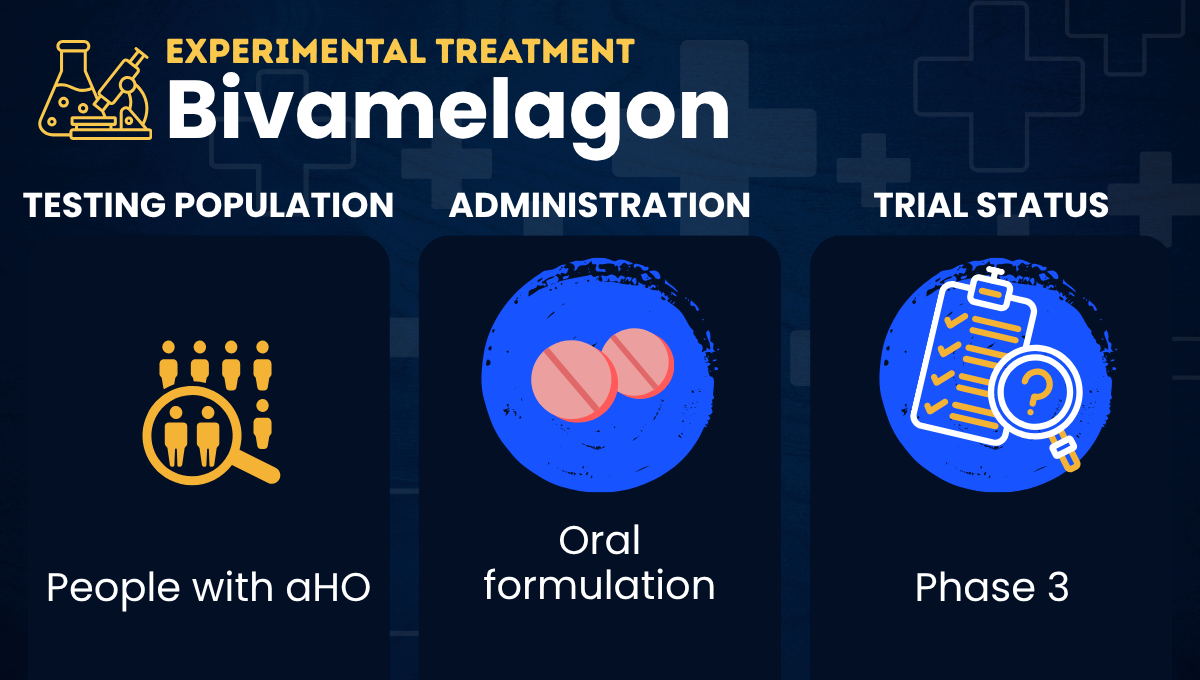
Bivamelagon is an experimental oral therapy that is being tested to see if it helps patients with acquired hypothalamic obesity (aHO) reach and maintain a healthy weight.
aHO is a rare obesity disorder caused by damage to the hypothalamus, an area of the brain that helps control appetite and metabolism, or how the body uses energy. This results in excessive hunger and reduced energy usage, leading to rapid weight gain that doesn’t respond well to diet and exercise interventions.
Bivamelagon is designed to decrease appetite and increase energy use to help people with aHO lose weight. It works to restore more normal signaling in the MC4R pathway, which helps regulate hunger and metabolism.
This is a similar mechanism to Imcivree (setmelanotide), an approved aHO therapy, but Imcivree is given by injection under the skin, while bivamelagon is taken by mouth. Bivamelagon is also expected to reduce the incidence of skin color changes, a side effect of Imcivree. Rhythm Pharmaceuticals develops both therapies.
Therapy snapshot
| Treatment name | Bivamelagon |
| Administration | Oral formulation |
| Clinical testing | Entering Phase 3 trials for aHO |
How will bivamelagon be administered in aHO?
In aHO clinical trials, bivamelagon is being tested as a once-daily oral therapy.
The dose to be used in Phase 3 trials has not been reported. In a Phase 2 study, bivamelagon was initiated at a daily dose of 200 mg, which was then gradually increased to 400 mg or 600 mg for some participants.
Bivamelagon in aHO clinical trials
Rhythm is currently planning for a Phase 3 trial of bivamelagon in people with aHO. It is supported by data from the earlier Phase 2 SIGNAL clinical trial (NCT06046443).
SIGNAL tested three daily maintenance doses of bivamelagon (20 mg, 400 mg, and 600 mg) against a placebo in 28 people with aHO, ages 12 and older. After the initial 14-week treatment period (about 3 months), all participants could receive bivamelagon for 38 additional weeks, for a total study duration of one year. Throughout the study, investigators assessed body mass index (BMI), a metric calculated using weight and height that can help estimate body fat.
Results from the trial showed that, after 14 weeks:
- BMI significantly decreased across all bivamelagon dose levels, with the greatest changes observed in those who received the highest dose (mean 9.3% reduction); BMI increased by a mean 2.2% in the placebo group
- changes in BMI with the two higher doses of bivamelagon were comparable to those seen in a separate Imcivree clinical trial
- Participants who received bivamelagon reported meaningful reductions in hunger, while those on the placebo reported an increase in hunger
- reductions in BMI were sustained or deepened for up to about nine months
An ongoing long-term extension trial (NCT07156578) continues to assess bivamelagon’s safety and efficacy for up to 2 years.
Bivamelagon side effects
The most common side effects of bivamelagon in a Phase 2 study included:
- diarrhea
- nausea
These side effects were largely mild. There were also reports of mild, localized skin darkening (hyperpigmentation).
Rare Obesity News is strictly a news and information website about the disease. It does not provide medical advice, diagnosis, or treatment. This content is not intended to be a substitute for professional medical advice, diagnosis, or treatment. Always seek the advice of your physician or other qualified health provider with any questions you may have regarding a medical condition. Never disregard professional medical advice or delay in seeking it because of something you have read on this website.