
When everything changed, and our normal life went away
A completely different chapter in our life began two summers ago
Written by |

Watching your rare disease child fight battles you can’t always process hurts like hell.
I knew my child had secondary adrenal insufficiency after he lost pituitary function following surgery to resect a brain tumor in October 2019.
From 2020 to 2021, Hollis rarely got sick, and I remember only about two times when he developed a fever. Both times we went to NewYork-Presbyterian Morgan Stanley Children’s Hospital, where the team took good care of him. At the time, Hollis was taking two medications vital to his survival: hydrocortisone and levothyroxine.
Hollis didn’t even get sick when my daughter Haven got COVID-19 three times. I tried my best to keep them apart, but they would sneak off when my back was turned to be near each other because of the love and bond that they share. I wasn’t scared. I took it like a champ.

Our normal life suddenly ends
We moved from the South Bronx to Far Rockaway, Queens, New York, in March 2022, and Hollis still never got sick — not with the flu, an ear infection, or even the illnesses his siblings would catch. Somehow, he always seemed to be the child who was spared.
Life felt as normal as it possibly could. If you were on the outside looking in at our family, you might not see that there was a child with rare diseases in our household. I started believing everything difficult was behind us and that Hollis would continue living as normally as possible, even though he depended on medication to stay alive.
I returned to work on June 14, 2023, and by December, I was working close to 60 hours a week, five days a week, with 12-hour shifts. As a single parent, I felt like Super Mom, managing work, five children, and Hollis’ medical care.
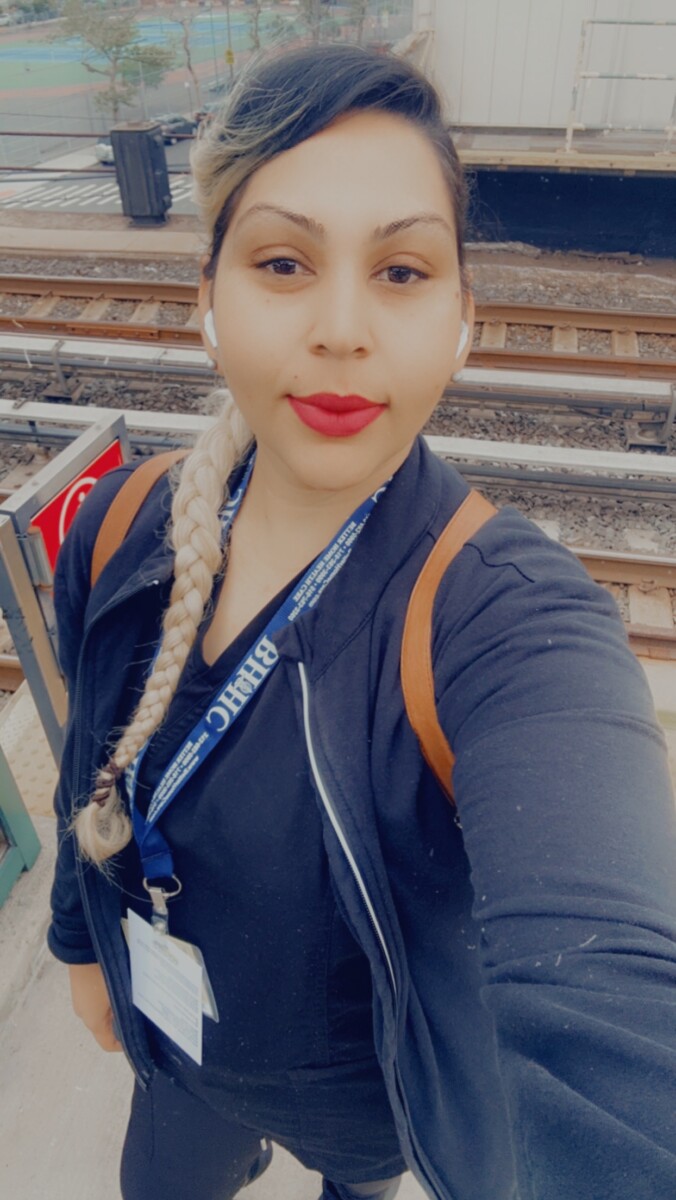
Sarah Horta returned to work in July 2023, when she started a job at Better Home Health Care in New York. (Photo by Sarah Horta)
I enjoyed my job. It gave me purpose and a stable income to raise my family. Hollis and his four siblings attended the same school and after-school program. We all had long days, but we had stability. Nothing felt unpredictable. If Hollis wanted to go outside, play basketball at the park, or have fun with his siblings and neighborhood friends, he did. He had what felt like a normal childhood.
We moved again in March 2024, this time to South Richmond Hill, Queens, because I wanted my children to be closer to my parents and strengthen their bonds with their grandparents, aunts, and uncles. I wanted my kids to have the world, and moving again felt like part of making that possible. Then came July 25, 2024.
Hollis and his siblings had been sitting on the balcony when my daughter Haylie suddenly screamed, “Mom, a bird is dead next to me and Hollis’ feet!”
Something felt different the next day. Haven, Hollis, and Haylie stood in a line in the hallway to give me hugs and kisses before I left. That made me so happy, and I went to work feeling extra good that day, which I needed because I was working hospice cases.
I had planned to take a weekend trip to West Virginia, but around 3:30 p.m., I suddenly felt like I couldn’t make it and I canceled everything. Approximately two hours later, I received a call from my children. Hollis had had a seizure. He was unconscious and had turned blue.
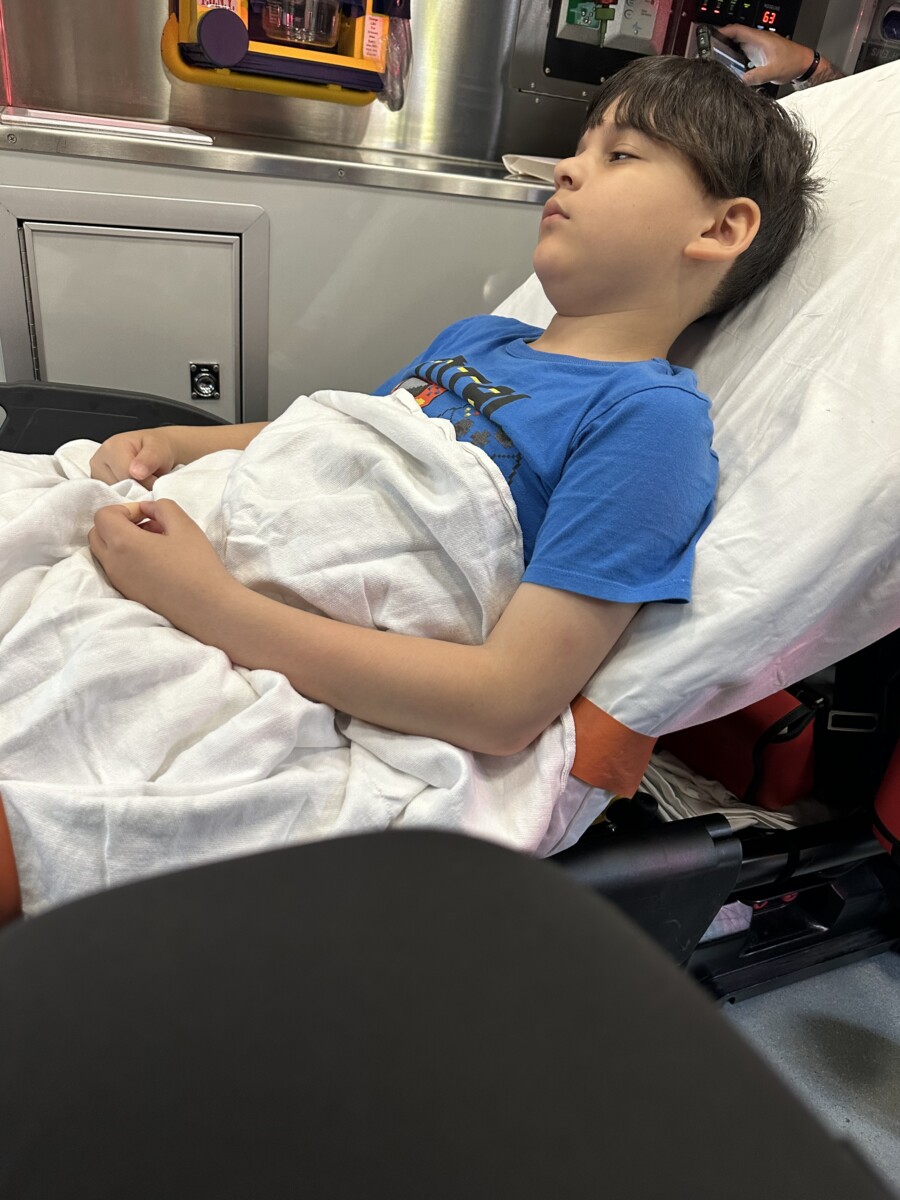
Hollis rests in a hospital bed following a seizure in July 2024. (Courtesy of Sarah Horta)
Hearing those words shattered me. I left work immediately.
Hollis was taken to Cohen Children’s Medical Center. A CT scan was performed, and he was started on anti-seizure medication. I contacted his oncology team, which began arranging additional testing. Hollis underwent a magnetic resonance angiogram and an MRI, and thankfully, the results did not show a stroke.
But sitting in that emergency room, my mind went straight back to the day before and the bird. It felt like bad luck.
Of course, I didn’t know what was actually coming. I didn’t realize it yet, but that was the day Hollis began a completely different chapter in his life — and we did too.
After years of what looked like a relatively normal childhood, Hollis became increasingly medically complex. New diagnoses, including acquired hypothalamic obesity, and challenges entered our lives, and I found myself searching social media for families and people who understood what our daily life had become.
Some days, I probably cried more than a baby. But I still had to be strong for Hollis and his siblings. We had found our new normal.
Note: Rare Obesity News is strictly a news and information website about these disorders. It does not provide medical advice, diagnosis, or treatment. This content is not intended to be a substitute for professional medical advice, diagnosis, or treatment. Always seek the advice of your physician or another qualified health provider with any questions you may have regarding a medical condition. Never disregard professional medical advice or delay in seeking it because of something you have read on this website. The opinions expressed in this column are not those of Rare Obesity News or its parent company, Bionews, and are intended to spark discussion about issues pertaining to rare obesity disorders.
